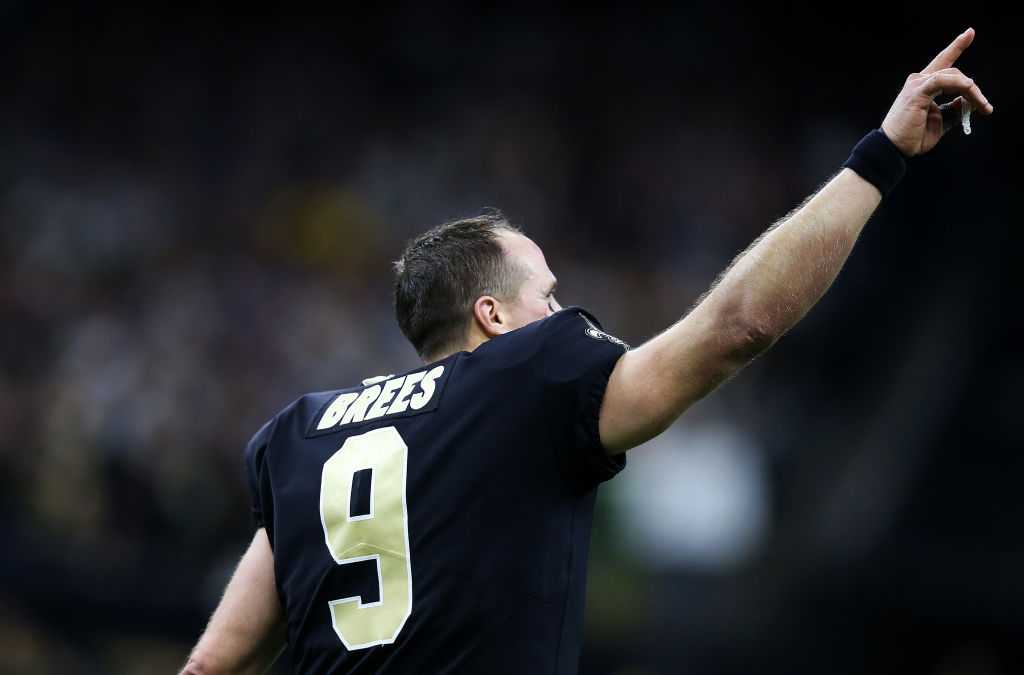
Former New Orleans Saints quarterback Drew Brees is preparing to officially enter the Pro Football Hall of Fame this weekend.
Brees and the rest of the 2026 Class will be inducted in a ceremony on Aug. 8 at noon.
From being the face of hope following Hurricane Katrina to giving New Orleans its only Super Bowl championship win, Brees’ career was defined by elite athleticism, devoted philanthropy, and a forever mark on New Orleans and professional football history.
Below is a detailed timeline of major milestones across his illustrious career as the quarterback for the Black and Gold.
A signing that changed a franchise
On March 14, 2006, the New Orleans Saints made what would become one of the greatest free-agent signings in NFL history.
Brees arrived in New Orleans with a recently repaired shoulder injury and an uncertain future. New Orleans was also rebuilding as it was still recovering from Hurricane Katrina less than seven months earlier.
Both Brees and New Orleans had something to prove. Together, Brees, the Saints and New Orleans began what is considered one of the most iconic comeback stories that ultimately led to a Super Bowl championship, shattered NFL records and his place in the Pro Football Hall of Fame Museum in Canton.
When the New Orleans Saints signed Brees, it was a gamble. His career had been jeopardized by a severe shoulder injury to his throwing arm that he suffered during his final game with the San Diego Chargers.
In Brees, the Saints saw a franchise quarterback, and Brees found a home where he could build something that was lasting.
Brees’ impact on the Big Easy was immediate.
After finishing 3-13 in 2005, the Saints went 10-6 in his first season, and they won the NFC South.
The team then advanced to the NFC Championship Game for the first time in franchise history.
Brees finished second in NFL MVP voting that season, transforming a team that entered the season with little fanfare into one of the league’s best rags-to-riches stories.
The “Domecoming” and New Orleans’ rebirth
The defining moment of that 2006 season came Sept. 25, when the Saints returned to the Superdome for the first time since Hurricane Katrina.
Thirteen months after the stadium was heavily damaged and used as a shelter during the storm, the Saints defeated their archrivals, the Atlanta Falcons, 23-3 during Monday Night Football.
Steve Gleason’s blocked punt became the infamous image of the matchup, even inspiring a statue called “Rebirth” that sits outside of the Caesars Superdome today.
The Domecoming game showed the world that New Orleans was back, and Brees was the face of hope in the city’s ongoing recovery.
Saints Go Marching In:
Three years later, the Saints produced the greatest season in franchise history.
The Saints dominated in 2009 with 13 consecutive wins, and the team earned the NFC’s top playoff seed. The run carried the Saints to their first Super Bowl, where they faced New Orleans native Peyton Manning and the Indianapolis Colts on Feb. 7, 2010.
Tracy Porter’s late interception return for a touchdown sealed the 31-17 victory in Super Bowl XLIV, but Brees’ performance earned him the game’s MVP award. He completed 32 of 39 passes for 288 yards and two touchdowns.
After the game, Brees lifted his young son Baylen into the air as confetti fell around them. The photograph became one of the most iconic images in New Orleans sports history.
A career defined by records
Brees continued rewriting the NFL record book long after delivering the Saints their first championship.
In December 2011, he broke Dan Marino’s 27-year-old single-season passing record. Brees finished the year with 5,476 yards while leading one of the most prolific offenses in league history.
In October 2012, he surpassed Johnny Unitas’ longstanding record of 47 consecutive games with a touchdown pass. Brees eventually extended the streak to 54 games.
Six years later, Brees passed Peyton Manning to become the NFL’s career passing-yardage leader. In December 2019, he moved ahead of Tom Brady for the career touchdown-pass record, although Brady later reclaimed the record.
Brees retired with 80,358 passing yards, 571 touchdown passes, 7,142 completions and 13 Pro Bowl selections.
Heartbreak in the NFC Championship Game
Brees and the Saints appeared poised for another championship run following the 2018 season.
The team earned the NFC’s No. 1 seed and hosted the Los Angeles Rams in the conference championship game in January 2019.
The game instead was remembered as the “NOLA No-Call.”
Officials did not penalize Rams defensive back Nickell Robey-Coleman for an apparent pass interference against Saints receiver Tommylee Lewis late in regulation. A flag likely would have allowed New Orleans to drain the clock before attempting a short, possibly game-winning field goal.
Instead, the Rams forced overtime and won 26-23.
The controversy led the NFL to make pass interference calls and non-calls reviewable for the following season, though the change only lasted a year. Many Saints fans felt Brees had lost his final opportunity to end his career with another championship, retiring on top.
Fighting through late-career injuries
Brees had been an Iron Man after his shoulder surgery that threatened his career. The quarterback missed only one game between 2006 and 2018.
That changed in 2019 when he injured his thumb in a freak injury against the Rams.
The injury forced him to miss five games.
Backup quarterback Teddy Bridgewater kept the season on track by leading the Saints to a 5-0 record during Brees’ absence.
In 2020, Brees suffered 11 fractured ribs and a collapsed lung after taking a hit against the San Francisco 49ers. He missed four games but returned to help the Saints reach the playoffs for a fourth consecutive season.
New Orleans won the NFC South in each of Brees’ final four seasons, but postseason losses to Minnesota and Tampa Bay ended his last two championship berths.
Emotional final game
Brees’ final game was against another Saints rival, Tom Brady, and the eventual Super Bowl champion Tampa Bay Buccaneers in January 2021.
Because of COVID-19 restrictions, fewer than 10,000 fans were inside the Superdome for the Saints’ 30-20 playoff loss.
Brees did not announce his retirement that night, but his actions suggested his career was over.
He blew kisses to his wife and children, waved to the remaining fans, and left the field visibly emotional.
Brees officially retired on March 14, 2021. The date was meaningful to Brees because it was exactly 15 years after signing with the Saints.
Later that year, he returned to the Superdome during a Thanksgiving game against the Buffalo Bills and led the crowd in one final “Who Dat” chant.
A first-ballot Hall of Famer
Five years after his retirement, Brees was elected to the Pro Football Hall of Fame in his first year of eligibility, which was no surprise to anyone.
He is the first Saint to earn a first-ballot induction, joining franchise greats Willie Roaf, Rickey Jackson, Morten Andersen and Sam Mills in the Pro Football Hall of Fame.
Brees will be formally honored Saturday, Aug. 8, as a member of the Hall of Fame’s Class of 2026.
The ceremony begins at noon at Tom Benson Hall of Fame Stadium in Canton, Ohio.
He will be inducted alongside Larry Fitzgerald, Luke Kuechly, Roger Craig and Adam Vinatieri.
READ MORE:Forever a Saint: Timeline outlines Drew Brees’ incredible NFL career ahead of Hall of Fame