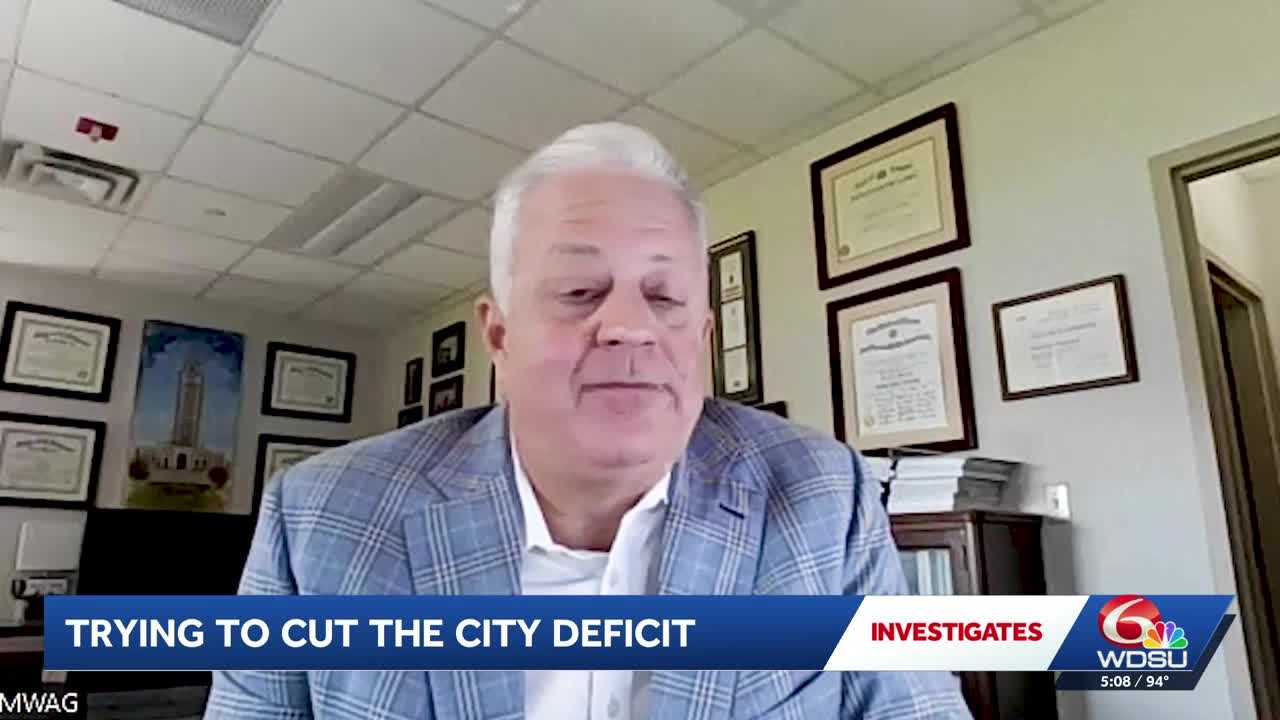
The Louisiana Legislative Auditor’s Office continues to help the City of New Orleans navigate its financial crisis.
According to Legislative Auditor Mike Waguespack, New Orleans has made strides in improving its financial situation, but says challenges remain for the city and its taxpayers.
“Moving forward, there’s still going to be some pain and some struggles and still some cost-cutting that needs to take place,” Waguespack said. “But in the long run, I think they’ll be better for it.”
The auditor explained that while the city is in a better position than it was a year ago, the city still has a cash flow problem.
“The cash flow will be tight. You know, we’re sitting on a better fund balance,” said Waguespack. “We began the year with about 60, you know, 65 million in fund balance. And then we did the sale of the Caesar strip. So technically speaking, we’re about, $160 million as far as a fund balance is concerned. Now, that’s not always cash. So that’s why there’s still a cash flow issue.”
The city’s deficit spending has also decreased compared to previous estimates.
“We estimated that the city would deficit spend about $140 million last year. I think it ended up being about $120 million. So that was a good surprise,” said Waguespack. “There is no deficit. In the budget, they’re not deficit spending this year. So, that’s the real story.”
Despite these improvements, residents may still face financial impacts.
“There’s going to be some pain with raising the sanitation fees to residents,” said Waguespack. “There was consideration of rolling for property taxes. There’s consideration of maybe an additional sales tax. That’ll be their decision.”
When asked about potential service cuts, the auditor pointed to personnel costs as a likely area for reductions.
“I would say your biggest expense is your personnel. And so that would probably be, you know, where some of them would have to go,” said Waguespack. “We’d just have to further downsize. I know a lot of the state leaders want to see the city manage its budget and downsize where they can.”
The auditor declined to comment on political disputes between city and state leaders but acknowledged the potential of how the conflict could affect the city’s financial future.
“Well, you know, I’m not going to comment on any of the debates going on between city leaders and state leaders,” the auditor said. “My line of travel is finances, and the legislature and the bond commission asked me to provide oversight. They asked me to figure out how the city got into this situation. So that’s my lane to travel. I think that the healing process has probably started. And we’ll just see where it goes.”
Addressing concerns from residents about the management of taxpayer money, the auditor acknowledged past issues.
“Well, I mean, I think there’s some merit to that,” said Waguespack “I mean, obviously, with the overtime, that was completely off the rails, us allowing these policies to be put in place that, you know, allows a retired fire captain to leave with $400,000 dollars of paid sick leave. That’s not good, you know, management of taxpayer dollars. So I’d be mad too.”
Waguespack said the city may no longer need the full $110 million once planned to borrow from the state. However, he believes New Orleans may still need access to a smaller financial safety net to get through another cash-flow crunch.
READ MORE:Despite improvements to New Orleans’ finances, auditor lays out ongoing cash flow challenges