When you call 911, the first thing you expect to see is a police officer.
But in the French Quarter, the first responder of the future could soon be a drone.
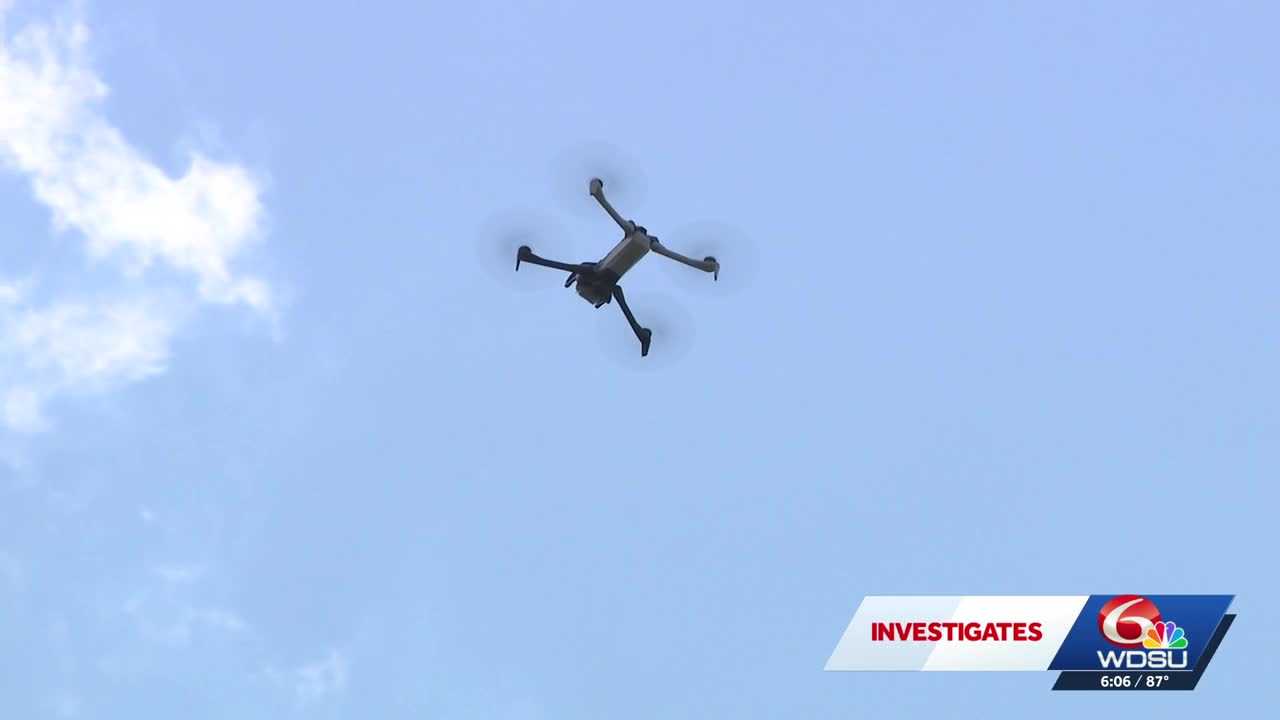
The New Orleans City Council has approved a new Drone First Responder program for the French Quarter, allowing the New Orleans Police Department to begin deploying drones to emergency calls in approximately six months.
Supporters say the technology could give police critical information faster, help officers respond more safely and provide a better view during emergencies or large events.
Critics say the program raises serious concerns about privacy, oversight and the future expansion of police technology in New Orleans.
The program was approved by the New Orleans City Council in a split 4-3 vote. Councilmembers Eugene Green, Jason Hughes, Freddie King and JP Morrell voted in favor of the proposal. Councilmembers Lesli Harris, Aimee McCarron and Matthew Willard voted against it, citing concerns about privacy, accountability and oversight.
The French Quarter Management District, a political subdivision created by the Louisiana Legislature, requested the $250,000 needed to fund the drone and docking station. The money will come from the French Quarter Economic Development District’s operating budget.
French Quarter Management District leaders said the district receives dedicated sales tax revenue to fund supplemental public safety initiatives and argued the drone program falls within that mission. Officials also noted voters overwhelmingly renewed the district in a recent election and said sales tax collections are currently exceeding projections.
NOPD already operates drones citywide. The department currently owns nine drones and has been using them since 2024. According to NOPD, eight drones are part of the city’s general fleet, while one is assigned to the 8th District. Officials said four of those aircraft are older models primarily used for training.
Department officials say the proposed French Quarter program is not about simply adding another drone, but changing how quickly one can be deployed.
Right now, NOPD leaders say a drone must be retrieved and launched manually by officers, typically from a nearby rooftop. Under the Drone First Responder program, the drone would be housed in a rooftop docking station and could be launched remotely by an FAA-certified NOPD officer stationed in the French Quarter.
During a French Quarter Economic Development District meeting, NOPD 8th District Commander Samuel Palumbo said the new system would allow officers to launch the drone without physically going to the roof.
“The new technology allows me to say, while you’re sitting at the desk, launch the drone,” Palumbo said.
Officials say the biggest difference is speed. The current process can take about six minutes to get a drone in the air. The new system could cut that response time to about two minutes.
The drone would be available 24 hours a day, seven days a week and could provide officers with information before they arrive on scene.
NOPD officials said the drone could be used to help assess crimes in progress, suspicious activity, missing persons, large events and other emergencies by providing officers with real-time information before they reach a scene.
Department leaders said the program would operate under NOPD’s existing drone policy, which outlines dozens of approved public safety missions for drone deployment.
The drone selected for the program will be manufactured by California-based Skydio, the same company that supplies the drones currently being used by the Jefferson Parish Sheriff’s Office.
Officials said the aircraft could be equipped with additional tools, including spotlights for search-and-rescue missions, speakers to communicate with people on the ground and dual cellular connectivity using multiple wireless carriers. The platform is also capable of carrying a small inflatable flotation device, though officials said they do not anticipate routinely using that feature.
NOPD officers showed WDSU how drones are already being used by the department.
Detective Nicholas Buckle said drones have helped map crime scenes, document fatal crashes and assist in search and rescue missions.
“Crime scenes, we mapped the terrorist attack. We’ve done a lot of search and rescue. We’ve mapped every fatal accident,” Buckle said.
During a demonstration, officers showed WDSU how drones can switch between camera views, use thermal imaging and zoom in on details from hundreds of feet above the ground.
Officers said thermal imaging helped them locate a man in the water at night after he fled from another agency. The drone picked up his heat signature, allowing rescuers to find him.
The drone’s zoom capabilities were also demonstrated during WDSU’s visit. From hundreds of feet in the air, officers were able to zoom in and see specific details, including a pair of gold shoes.
Officers say that type of aerial view can be especially useful in a city known for festivals, parades and large crowds.
One example NOPD pointed to happened during this year’s St. Joseph’s Day celebrations.
Officers said a wanted man blended into a large crowd during the event. From the street, he was one face among many. From the sky, officers say the drone helped locate him.
Ryan O’Quinn with NOPD said officers on the ground had a clothing description, but the crowd made it difficult to find the suspect.
“The pilot that was working that assignment was able to locate him using the drone from above,” O’Quinn said.
The drone pilot was then able to direct officers on the ground to make what police described as a safe arrest.
Officials say the French Quarter was selected because of its large crowds, heavy tourism and complex security needs.
Palumbo said drones can be especially useful during major events to help commanders check security perimeters, monitor barriers and make sure vehicles are not breaching restricted areas.
“One of the things that I do use them for during special events is to be able to check and make sure that our perimeters are secure,” Palumbo said.
The proposal comes as police departments across the country continue looking for ways to use technology amid officer shortages and increasing demands.
New Orleans is not the only local agency moving in this direction.
The Jefferson Parish Sheriff’s Office recently launched what it calls the largest Drone First Responder program in the country.
Between November and February, JPSO officials said their drones logged more than 5,000 flights and 800 hours in the air. The agency said the drones assisted in 170 arrests, helped recover 26 stolen vehicles and assisted in 15 firearm investigations.
Supporters of the New Orleans proposal point to those numbers as evidence that the technology is already being tested on a much larger scale nearby.
Not everyone supports the expansion of drone technology in New Orleans.
Opponents worry the program could lead to greater police monitoring in a neighborhood filled with balconies, courtyards and private residences. Several residents and advocacy groups argued during public meetings that the French Quarter is already heavily surveilled and questioned whether additional technology is necessary.
At the council meeting, some members questioned how NOPD would avoid capturing video of private spaces in the French Quarter.
Palumbo said any specific search of private property would require a warrant.
“Our policy already stipulates that just like with any other technology, if we’re going to use it to observe and search or do anything like that on private property, we’re already required to get a search warrant,” Palumbo said.
Palumbo said drones would typically operate between 185 and 200 feet above the ground, although Federal Aviation Administration regulations allow flights up to 400 feet. He acknowledged drones traveling to calls could pass over private property while taking the most direct route to an incident.
NOPD officials say the Drone First Responder program would operate under the department’s existing drone policy.
Officials also said all flights are recorded from launch until landing, creating a record that can be reviewed if questions arise about how the technology was used.
NOPD also stressed that the drones are not equipped with facial recognition technology, a concern frequently raised by opponents of police surveillance programs.
However, some council members questioned whether images captured by drones could later be used through the department’s existing facial recognition processes, similar to other police video systems.
Groups opposed to the program, including Eye on Surveillance, have raised concerns about privacy, civil liberties, government oversight and the possibility that a pilot program in the French Quarter could eventually expand citywide.
Opponents have also expressed concerns about what they describe as “mission creep,” warning that a pilot program initially limited to the French Quarter could eventually expand across the city without additional public input.
NOPD leaders say the program would include a public dashboard designed to show how the drone is being used.
According to department officials, residents would be able to view information including the date, time, duration, reason for the flight and the aircraft’s flight path through the online dashboard.
Palumbo said the dashboard would show every flight from the drone, including the time, reason for the flight and flight path.
“You won’t get the actual video that was captured, but you get every other metadata that is publicly available,” Palumbo said.
Officials said the dashboard would not include video footage from flights.
Questions still remain about how long drone video will be retained and who will have access to those recordings.
The drone and docking station are expected to be operational within the next six months.
For now, the program includes one drone in the French Quarter.
However, NOPD Superintendent Anne Kirkpatrick has said she hopes similar technology could eventually expand to other parts of the city.
For supporters, the program is a tool that could help officers respond faster and safer.
For critics, it is a test of how far police technology should go.
For now, the drone program is cleared for takeoff.
But whether it ever flies beyond the French Quarter remains to be seen.
READ MORE:Police drones could soon respond to 911 calls in French Quarter before officers arrive