Federal and state leaders gathered in New Orleans Thursday to discuss hundreds of millions of dollars in new Gulf Coast restoration projects tied to the Deepwater Horizon disaster.
The annual RESTORE Council meeting focused on roughly $400 million in proposed projects across the Gulf Coast, including major restoration work planned for Louisiana.
Environmental Protection Agency Deputy Administrator David Fotouhi, who chairs the RESTORE Council, said the funding comes directly from the companies responsible for the 2010 oil spill.
“It’s all from the responsible parties. It’s not taxpayer money. It’s coming from the folks that caused the Deepwater Horizon spill,” Fotouhi said.
The RESTORE Council was created by Congress after the Deepwater Horizon disaster to oversee settlement funding tied to environmental restoration projects across Louisiana, Texas, Mississippi, Alabama and Florida.
According to officials, the projects are aimed at improving wetlands, coastal protection, storm mitigation, fisheries and habitats across the Gulf Coast.
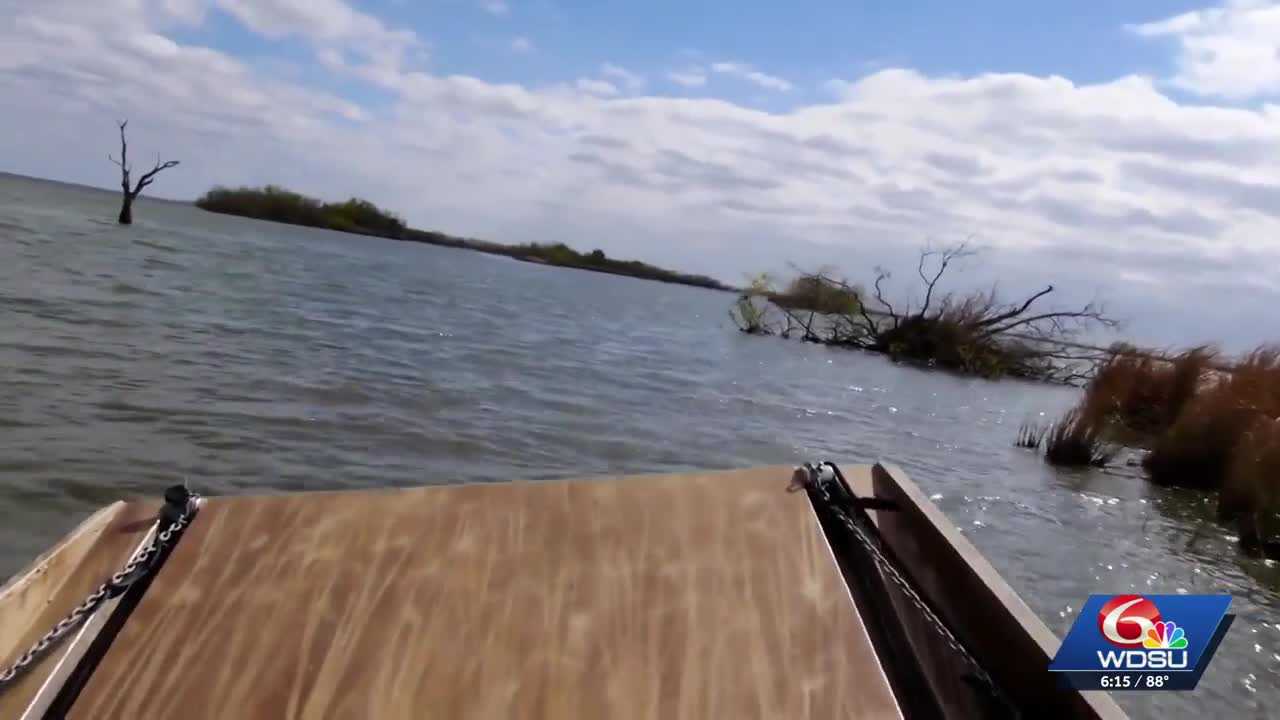
One of the largest Louisiana projects expected to move forward this year includes $90 million for restoration work on the Chandelier Islands.
Fotouhi said the project would target approximately 5,200 acres of wetlands while also helping address erosion concerns along Louisiana’s coastline.
“It’ll help the fishing industry, it’ll help the species that call that area home, and it’ll also help with preventing against future erosion,” Fotouhi said.
Louisiana continues to face significant coastal land loss. The state loses roughly a football field of land every 100 minutes, according to state coastal data.
Officials say the projects impact more than just the coastline. Restoration efforts are also tied to industries many Louisiana families rely on, including seafood, tourism, boating and storm protection for coastal communities.
WDSU Investigates asked Fotouhi how communities can know the funding is being properly spent and whether residents are truly seeing results from years of restoration work.
“We are laser focused on making sure that this money is spent wisely,” Fotouhi said. “The projects that we’re talking about have taken months to develop. They really have careful plans that are going to be put in place.”
Fotouhi described the process as a partnership between federal and state leaders, saying Gulf Coast states help determine which projects move forward and where funding is prioritized.
“It puts each of the states in the driver’s seat,” Fotouhi said. “There needs to be sort of a consensus that these individual projects will help the Gulf overall and help Gulf Coast economies.”
Officials say projects also go through public comment periods and multiple rounds of review before funding is approved.
Officials say Louisiana remains one of the states most vulnerable to coastal erosion and wetland loss, making restoration efforts critical not only for environmental protection but also for industries tied to the Gulf economy.
Fotouhi acknowledged one of the biggest ongoing challenges is ensuring projects move beyond planning stages and actually produce measurable results.
“The challenge really is ensuring that these projects are well developed, are targeted and are bringing results,” Fotouhi said. “We’re talking about an environment that’s changing with regard to coastal erosion and wetlands.”
Officials say the RESTORE Council has already spent more than $1 billion on Gulf restoration projects since Deepwater Horizon, with additional rounds of funding expected in the coming years.
“We’re really building on that to make it more resilient, healthier, with more habitats, and a better ecology for the area,” Fotouhi said.
READ MORE:EPA unveils $400M in Deepwater Horizon restoration projects across Gulf Coast