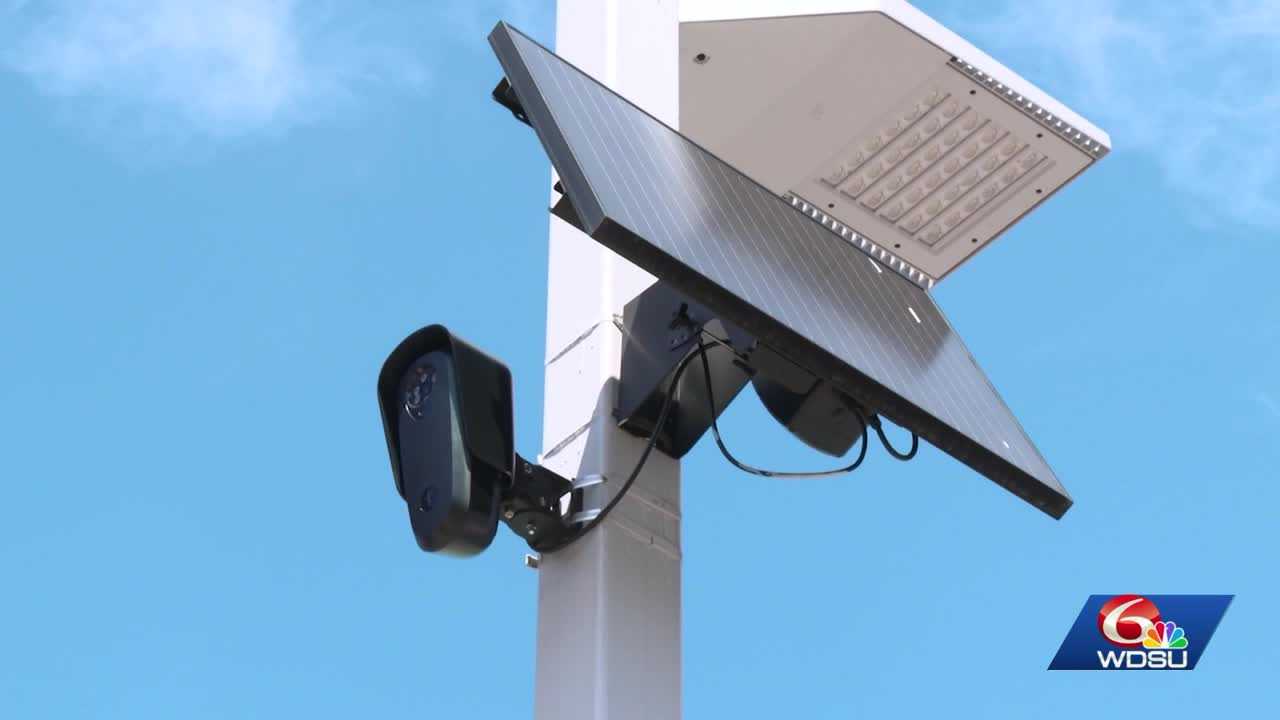
Flock license plate readers, a surveillance tool used to identify vehicles, help police in southeast Louisiana solve crimes while sparking concerns about privacy and misuse.
Kenner police Chief Keith Conley said the city installed more than 50 Flock cameras in 2023 and now has over 70. The department recently used the system to arrest a man driving a stolen car, according to a Facebook post.
“We put them up , and within three or four months we had already solved a first-degree murder,” Conley said.
Kenner police used to have about a dozen license plate readers before switching to the Flock system. Conley said the other cameras relied on electricity and would often be out of service. So, they switched to Flock because those cameras are solar-powered and maintained by the company.
Conley said the Flock license plate readers alert officers if a car in the National Crime Information Center database is photographed in their city. Other than that, he said Kenner cops can only search for pictures of cars related to a specific case.
“It is a vehicle recognition camera,” Conley said. “You can put any kind of description of a vehicle, a bumper sticker, any unique feature of that vehicle, and it will search the system and find it.”
Kenner’s subscription to Flock costs about $250,000 annually, funded by the state. That total includes the cost of the equipment and maintenance.
“So far this year we’ve probably solved 100 or more cases, everything from hit-and-runs to protective orders to stolen vehicles,” Conley said.
Flock’s website states its cameras are used in more than 12,000 communities across the U.S.
“If a detective puts in a vehicle that’s wanted for a certain crime, you know, it’ll hit any Flock system that’s throughout this region, throughout this country,” Conley said.
While law enforcement officials praise the technology, others express concerns about its implications for privacy. As WDSU’s sister news station in Orlando, Florida reports, some police in that region have taken their license plate readers offline.
“It’s not just about keeping track of one person. It’s everybody in the country, every man, woman and child in a vehicle,” said civil rights attorney Glenn McGovern.
McGovern said Flock is different from other license plate readers because it collects nationwide data on cars and their movements.
“We’re past 1984. This is worse,” McGovern said, referencing George Orwell’s dystopian novel. “There are no standards, and each municipality has to come up with their own standards, and they’re behind the ball on this.”
Earlier this month, The Washington Post reported that at least 50 law enforcement officers nationwide have been charged with misusing Flock cameras or similar systems, sometimes to stalk people, including former romantic partners.
“The things that can go wrong are terrible,” McGovern said.
He told WDSU he is also concerned about bad actors potentially hacking into Flock’s database.
Conley said Flock searches are internally checked by higher-ranking police personnel to help prevent misuse of the system’s data in Kenner.
“We have access to a lot of criminal databases,” Conley said. “That kind of abuse can take place in those systems as well. So I would never punish the whole city of Kenner if I find one officer abusing the system; I’m just going to get rid of that officer.”
Flock’s website states that its license plate readers do not identify people and the system tracks who searches for what. However, the company’s video cameras — a separate product — detect human presence, but not personal characteristics.
Flock did not respond to a request for comment Wednesday.
READ MORE:Flock license plate readers raise privacy concerns while helping cops