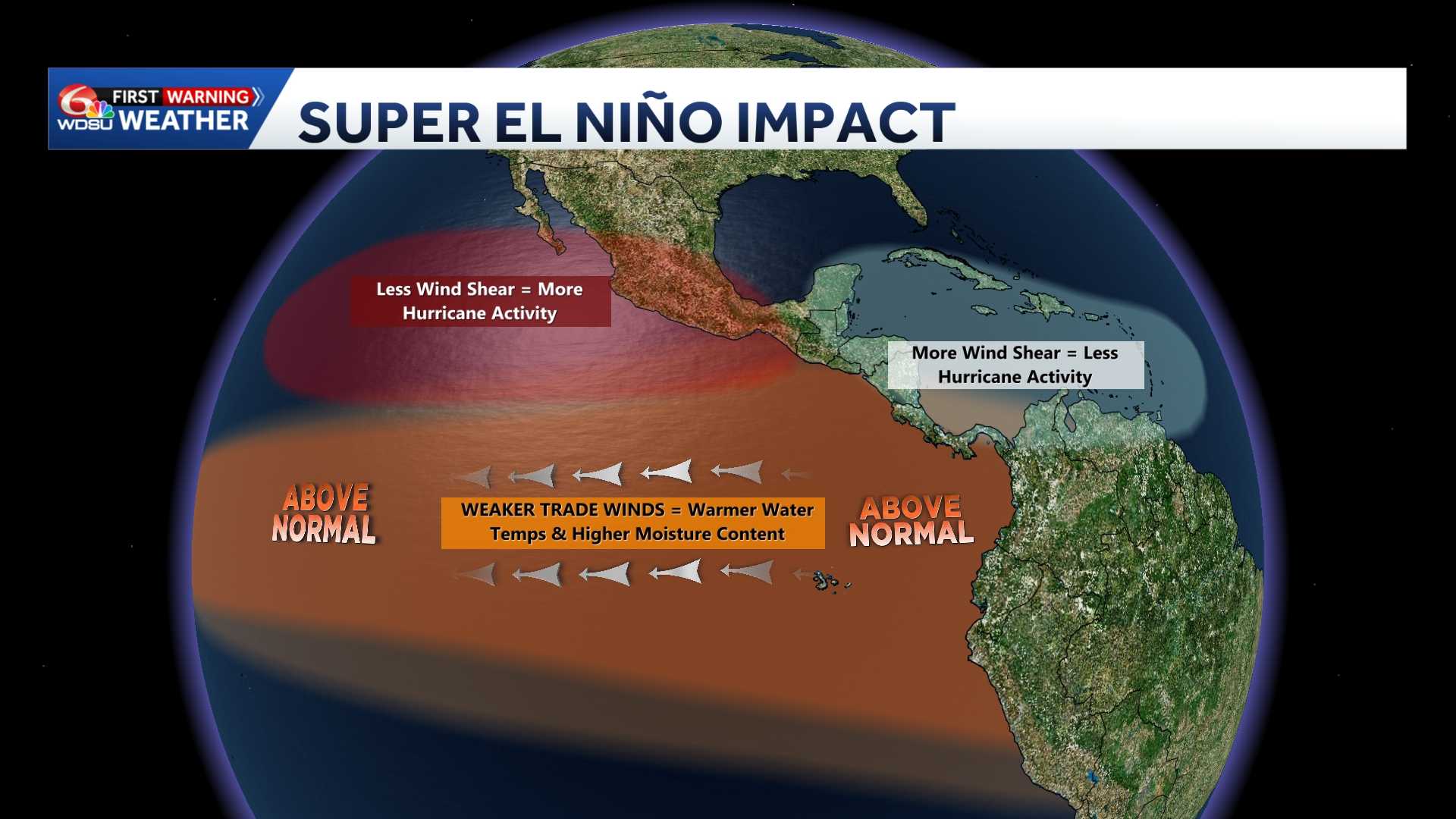
A Super El Niño, marked by significantly above-average water temperatures in the central and eastern Pacific, could influence the Atlantic hurricane season with both suppressive and localized effects.
This event has the potential to be historic, possibly surpassing the benchmark years of 1982, 1997, and 2015.
The ripple effects of a Super El Niño are expected to impact the Atlantic hurricane season, with El Niño driving strong wind shear into the Atlantic and creating a drier pattern from Africa to the Caribbean. Shear and dry air help suppress hurricane activity.
Even during El Niño seasons, catastrophic storms have occurred, such as Audrey in 1957 and Betsy in 1965.
Forecasts from Colorado State University and NOAA both predict below average seasons.
However, Gulf water temperatures are running well above normal, which can fuel potential storms close to home. Model guidance highlights homegrown activity in the Gulf, Southeast Atlantic, and near Bermuda as areas to watch. This season may not feature the classic Cabo Verde storms but could see systems that develop quickly and close to home.
READ MORE:How the Super El Niño will impact the Atlantic hurricane season