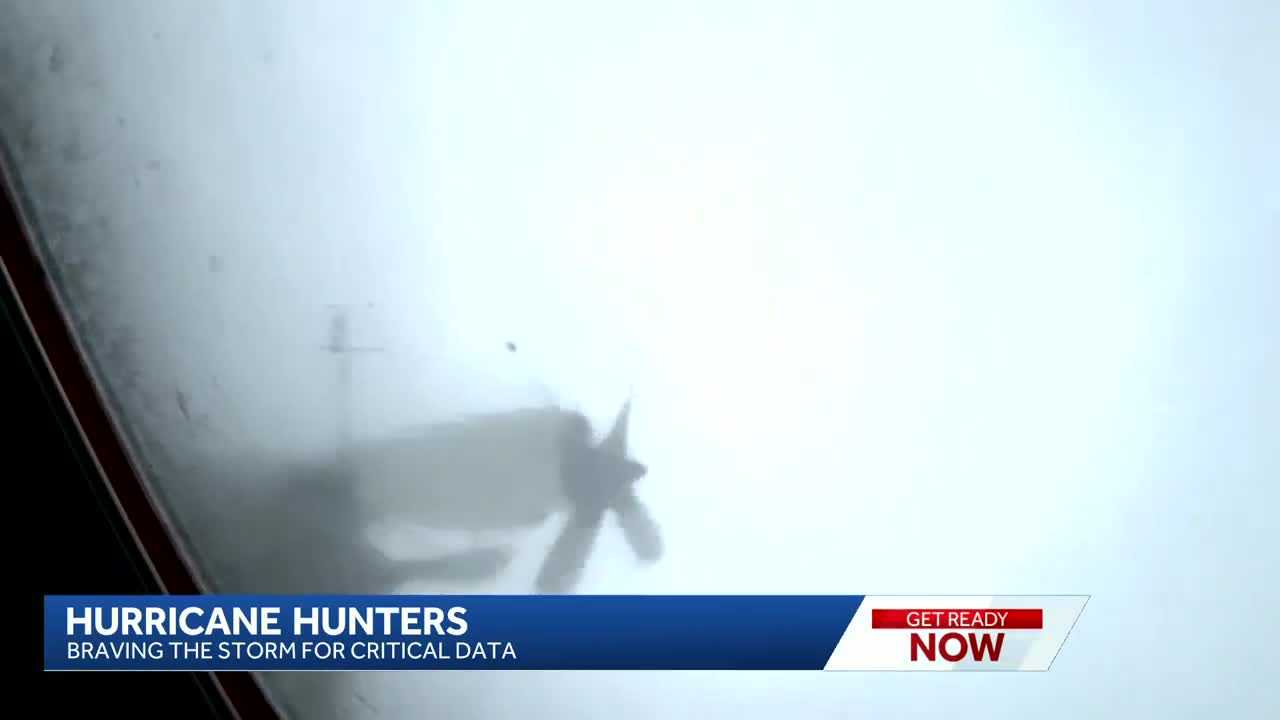
The NOAA hurricane hunters fly directly into a disturbance or cyclone to investigate and collect vital data for critical forecasts.
Atmospheric variables are collected using highly sophisticated weather instruments on-board the plane, including releasing dropsondes that are released from the plane, and all the way down to the ocean’s surface.
All of that data is then transmitted via satellite to meteorologists at the National Hurricane Center in Miami, Florida, which is crucial for forecasting life-threatening hazards from hurricanes, including storm surge.
But storm surge isn’t the only concern. Fresh water flooding from tropical cyclones is also a big threat.
Even if you are not along the coast experiencing storm surge, heavy rain can still lead to big problems farther inland.
These hurricane hunter missions are an important piece to help protect lives and property, but it comes at a scary risk. Lt. Col Jeremy Dehart says, “it feels like a roller coaster going through a car wash.”
READ MORE:How hurricane hunters help provide life-saving hurricane forecasts