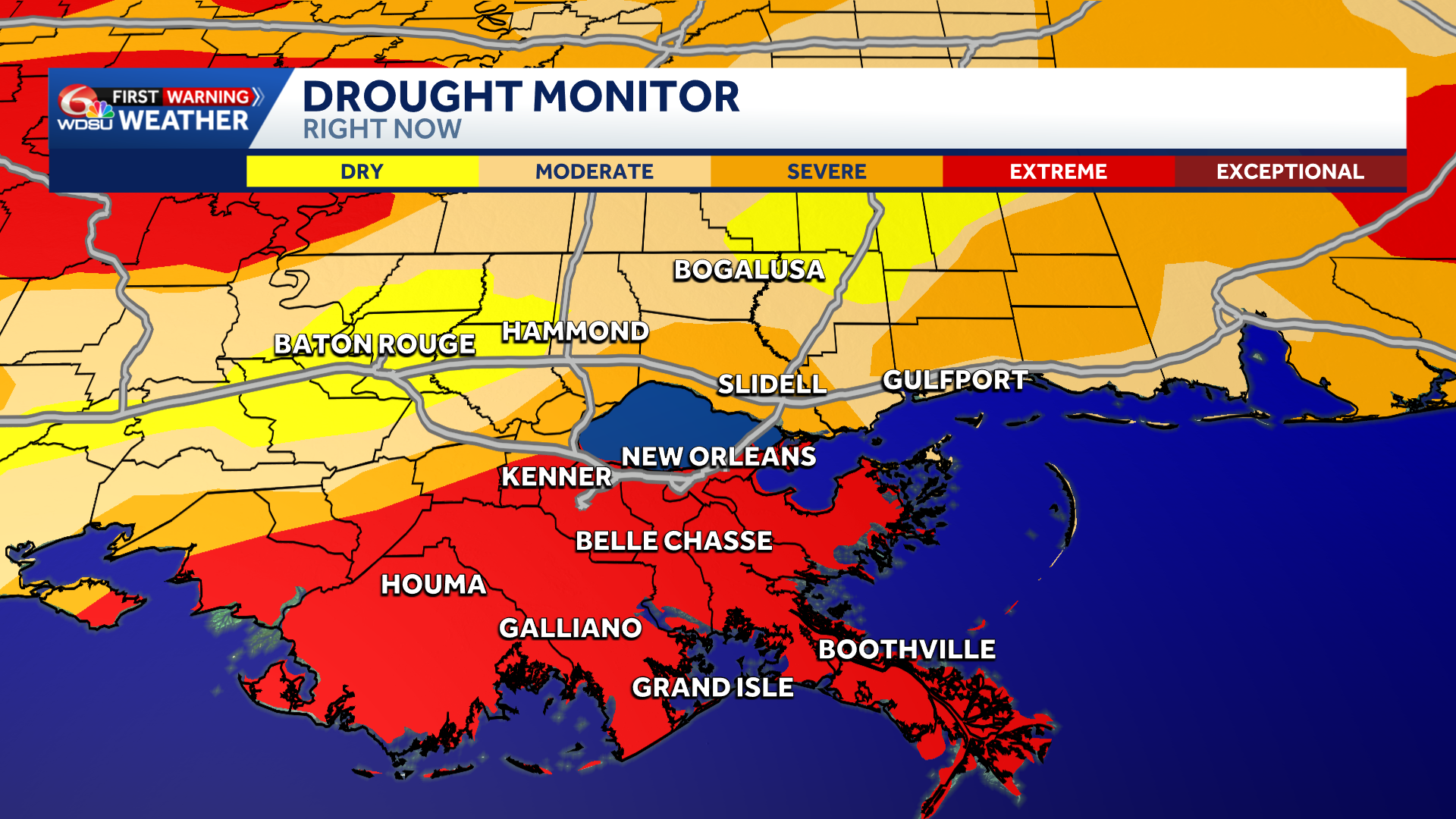
The New Orleans Metro area has now been upgraded to “extreme” drought conditions as of the latest update from the U.S. Drought Monitor.
This also includes all of the Bayou, coast, and parts of the River Parishes.
Here are the impacts of what an extreme drought can do in Louisiana:
- Rice crop is expensive to maintain; soybean yields are reduced; rye growth is stunted.
- Saltwater intrudes into rivers; rivers are too salty for irrigation.
- Trees are drought stressed; crawfish population is low.
- Burn and firework bans are implemented; fires are difficult to extinguish.
- Water pressure is low; voluntary water restrictions are requested.
- Allergies worsen; air quality is poor.
The latest update comes due to the continued lack of rainfall across much of southeast Louisiana, where only 1.04″ of rain have fallen so far for April, and only 9.44″ have fallen for the year, which is nearly 7″ below average as of April 16.
The last time New Orleans was under an extreme drought was in late August 2023, which later worsened to “exceptional” by November of that year.
Unfortunately, no significant rain is in the forecast to help put a dent in the current drought over the next week.
Stay with the WDSU First Warning Weather team for updates.
READ MORE:Extreme drought conditions are now being felt in the New Orleans metro