After a terror attack suspect plowed through crowds on Bourbon Street on New Year’s Day, WDSU was allowed rare, exclusive access to the hospital that treated a majority of those injured in the tragedy.
The level-one trauma center at University Medical Center in New Orleans treated many of the victims of the Bourbon Street terror attack.
WDSU Investigates | Super Bowl 2025 guide | Latest on Bourbon Street terror attack
With the 2025 Super Bowl less than a month away, WDSU investigative reporter Aubry Killion got a first-hand look at how they’re prepared to give world-class care.
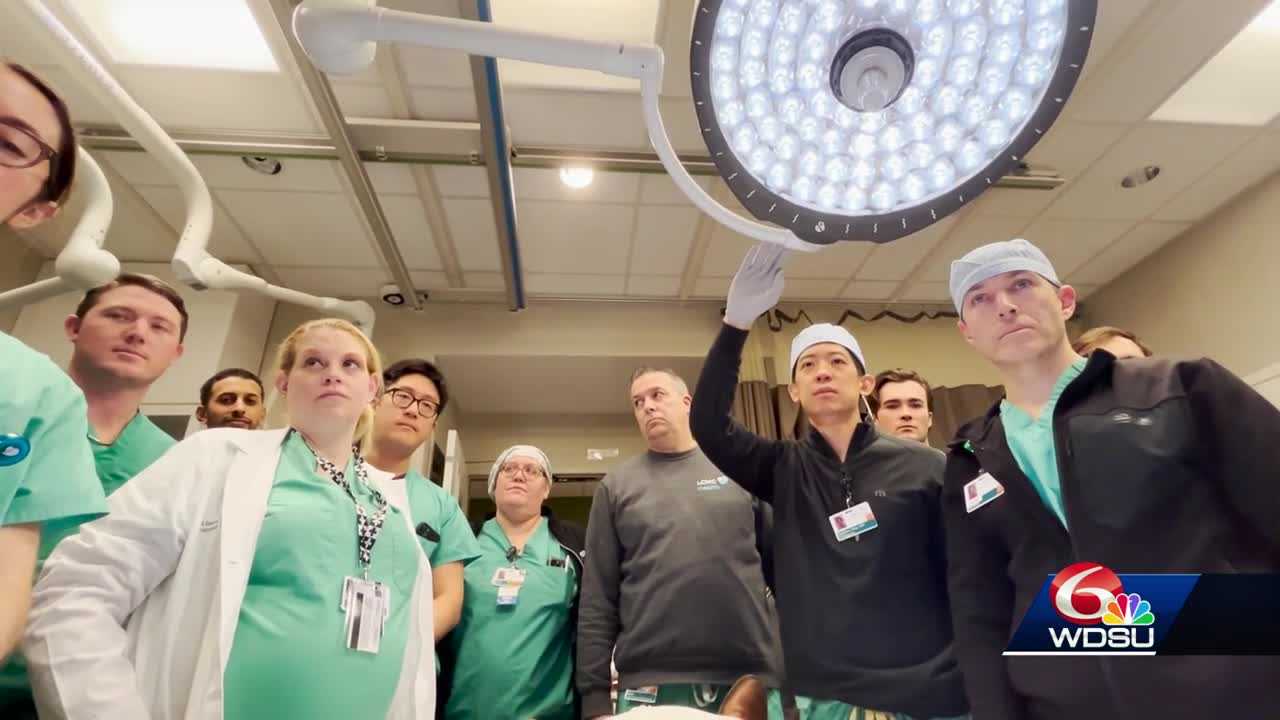
The UMC team demonstrated the crucial drills and scenarios they practice in preparing for mass casualty incidents.
A team of 10 to 20 medical experts from all backgrounds are prepared for anyone who arrives.
“It can be chaotic, controlled chaos,” Alison Smith, MD, said.
Related: Dr. Jeffrey Elder describes the injuries UMC treated after the Bourbon Street terror attack. You can subscribe to WDSU’s YouTube page and view that interview here.
Smith is the UMC trauma medical director and a top trauma surgeon.
“Fortunately, we didn’t have to add in something like a burn injury if there had been explosions as well. We prepare for all these unique scenarios here,” said Smith.
Smith said before the patient arrives, care starts with EMS.
A team at the hospital will then assess the patient before they walk through the door of “room number four.”
Room number four is a nod to the hospital’s legacy dating back to Charity Hospital.
“When the trauma center opened in 1996, room four is where they would run all the trauma,” said Smith.
If a patient needs to go straight to an operating room, it is staffed and ready to go.
The trauma center is named after Dr. Norman McSwain.
McSwain’s name can be seen by the patient before they enter the trauma center.
McSwain spearheaded the planning and coordination efforts for what would become University Medical Center in New Orleans.
“Dr. McSwain used to say death is your competitor. You fight to win,” Smith said. “So that’s how we approach everything. We are always fighting against death. We want you to go home. We want you to go back to your families. We will provide you with support along the way to get you there.”
Jeffrey Elder, MD, Chief Medical Officer said UMC is prepared for the Super Bowl and any rush of patients.
“That could be anywhere from a handful of patients to hundreds of patients in a large scale or maybe more,” Elder said.
At UMC, it’s not just physical care.
“People are always asking me, ‘How do you do this job,’” said Dr. Erika Rajo.
Rajo is a trauma psychologist. She also helps with connecting families with resources for financing, housing, jobs, and more.
“Seeing the strength in these people really helps me energize, bottle it up, and bring it to the next patient,” Rajo said. “We have the Seeds of Nola trauma recovery center here at UMC. We offer therapy med management support groups to support that recovery, that emotional healing after something like this.”
To request an appointment regarding trauma recovery, UMC said call 504-702-4335.
To view the simulation drill video, click the video above.
READ MORE:WDSU Investigates: UMC gives rare access to trauma care following terror attack