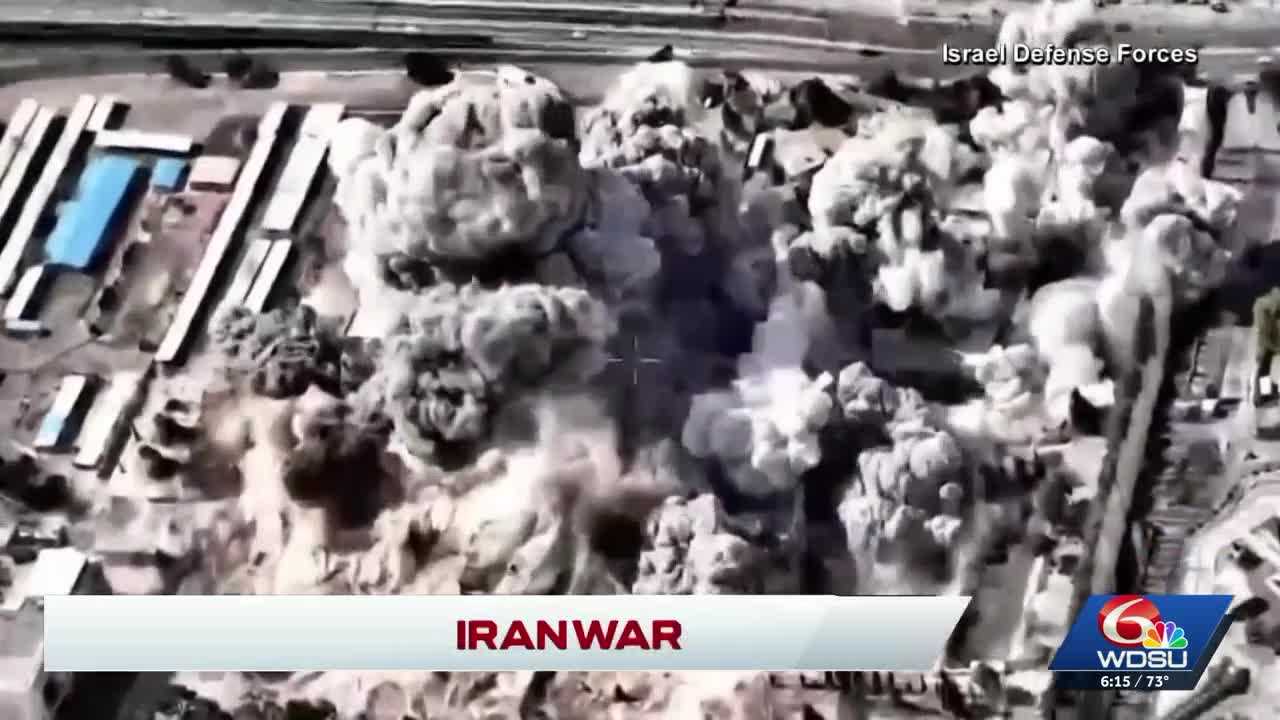
Covington native Bobby Piner is stuck in Qatar amid the ongoing Iran War in the Middle East.
Piner, who has worked in the liquified natural gas industry, says he’s trying to get home and hopes state, local and federal officials can help him do so, as nearby airports remain closed.
Describing war:
“I’ve been doing this 45 years, and I’ve traveled all over the world; I’ve never been in a war zone,” said Piner.
According to Piner, he began hearing rockets on Saturday, forcing him to take shelter in a camp.
“There’s a lot of shrapnel, so you have, it’s all steel, that’s my concern. Pieces of the rocket falling on you, people die just from that,” he said.
Finding a way home:
WDSU has reached out to local and state officials for more details on plans to bring Louisianians home. We are still waiting to hear back.
As the war continues, local experts are weighing in on the economic impact people at home may be seeing as well.
“Our regional economies are disproportionately dependent on oil and gas refining and production,” said University of New Orleans economics professor Greg Price.
He says the liquified natural gas industry is a key aspect of Gulf Coast economies, and nearly 20% of LNG is distributed through the Strait of Hormuz, which is currently being impacted by the ongoing strikes.
According to Price, the result is higher prices at the pump and the potential to impact LNG prices long-term.
More on the war:
The United States military employed 26 types of aircraft, vessels and systems during the first 72 hours of its operation in Iran.
“Operation Epic Fury” was launched at 1:15 a.m. Saturday morning, according to U.S. Central Command. Over the first 72 hours of the operation, more than 1,700 strikes occurred by the United States.
The Center for American Progress estimated as of March 2, the U.S. had spent more than $5 billion on the attacks on Iran.
The Get the Facts Data Team compiled information about some of the various aircraft used in the United States’ first 72 hours of the Iran War. The data collected includes the cost per unit at the time it was built or according to the U.S. Air Force website.
READ MORE:‘I’ve never been in a war zone’: Louisiana man stuck in Qatar amid ongoing war